In modern dry bulk handling and powder processing, safeguarding production lines from microscopic metal fragments is a dual challenge of ensuring product purity and preventing catastrophic machinery damage. For processing lines utilizing vertical gravity chutes, circular hoppers, and pneumatic pipelines, the Food Grade Round Magnetic Grate stands as the most reliable, passive defense mechanism available.
However, simply placing a generic magnetic grid into a hopper is not enough. Achieving zero-contamination purity requires a deep understanding of how material behavior interacts with permanent magnetic circuits.
The Mechanics of the Staggered Rod Design
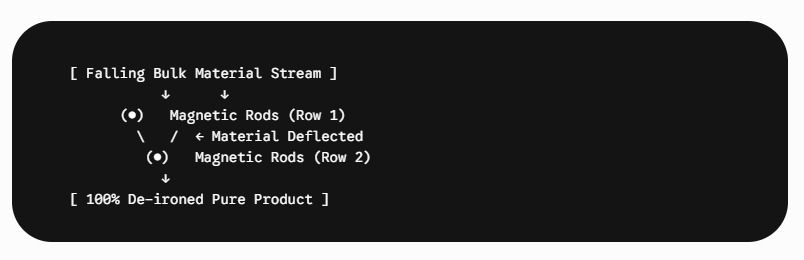
The core engineering secret of an efficient magnetic grid lies in its internal geometry. In a standard gravity-fed system, bulk powders—such as sugar, flour, pharmaceutical active ingredients, or plastic pellets—tend to stream through open spaces at high velocities.
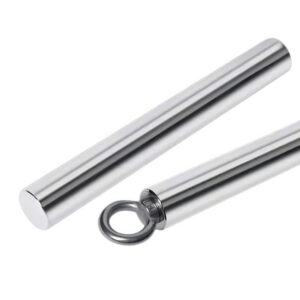
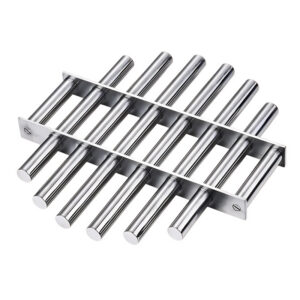
To combat this, MagnetGlobal Separation designs its circular units with a highly optimized, staggered array of permanent magnetic bars. This deliberate physical arrangement forces the falling material stream to cascade and change direction as it passes through the grid. By slowing down the product velocity and ensuring that every particle passes within the immediate “catch zone” of a high-intensity magnetic circuit, the system prevents bypassing and maximizes trap efficiency for fine iron fragments and metal wear.
Balancing Flow Rate with Deflection
A common issue in hopper-fed systems is “bridging” or material clogging, which happens when sticky or highly cohesive powders stack up on top of structural components.
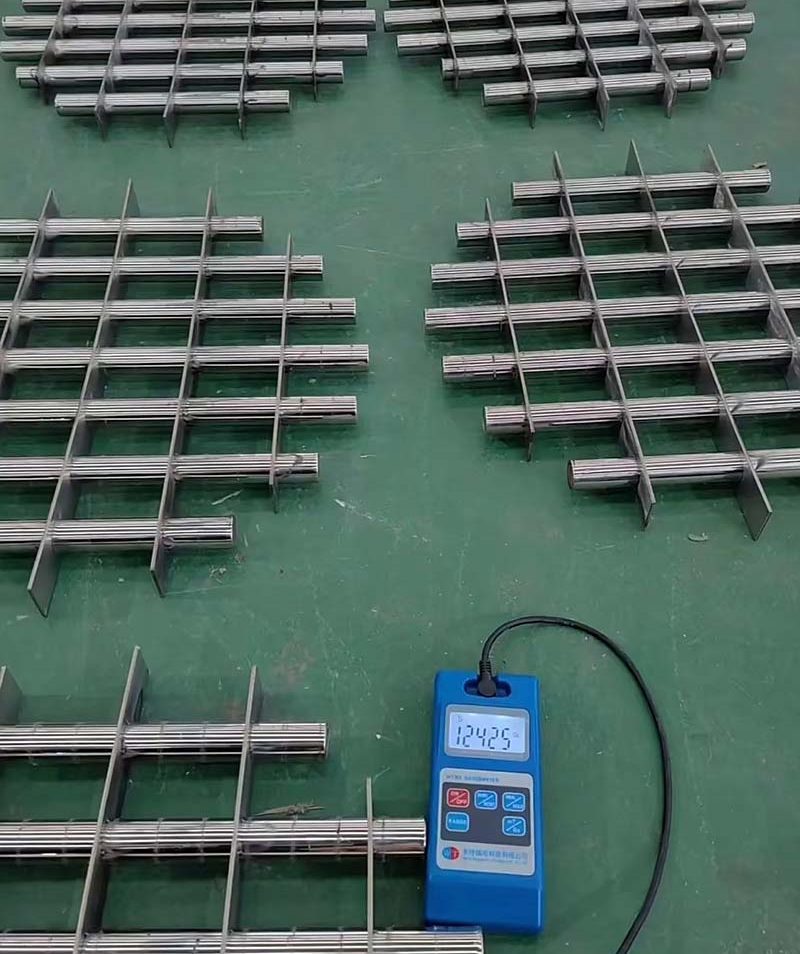
When configuring a magnetic grate separator, engineering support is vital. The spacing between the parallel stainless steel tubes must be wide enough to maintain your plant’s required hourly volumetric flow rate, yet tight enough so that the magnetic flux lines bridge the gaps completely. Custom options, such as incorporating triangular deflection wedges on top of the rods, can further split the material stream, guiding it smoothly over the high-flux surfaces while completely eliminating product caking.
Tailored Engineering for Seamless Integration
No two processing plants are identical. Whether you are running an injection molding setup in the plastics industry or a high-throughput grain milling line, seamless mechanical integration is critical to keeping downtime to a minimum.
Through robust OEM and ODM support, the structural outer frame diameter, the exact number of integrated rare-earth bars, and customized mounting tabs or pull-out drawers can be tailored to match your existing plant infrastructure perfectly. This turnkey adaptability ensures that upgrading your passive filtration system requires zero costly modifications to your current vertical chutes or hopper inlets.