
Magnetic Rods & Bars for Separation
Magnetic rods and bars for separation are industrial iron removal devices designed for efficient removal of ferromagnetic contaminants. Their core material is rare-earth neodymium iron boron (NdFeB) permanent magnets, encased in 304 or 316L stainless steel tubing. They are widely used in industries such as food processing, pharmaceuticals, plastics, and general manufacturing to improve product purity and protect upstream and downstream equipment.
Common specifications include diameters of 10–100 mm and lengths of 200 mm to 2 meters. Thanks to the properties of rare-earth permanent magnets, they can operate in high-temperature environments up to 350°C. The ends of the magnetic rods are typically sealed and can be customized with threaded holes or lifting rings for integration into magnetic separation systems. Regular cleaning of collected iron particles and proper maintenance are essential for optimal performance.
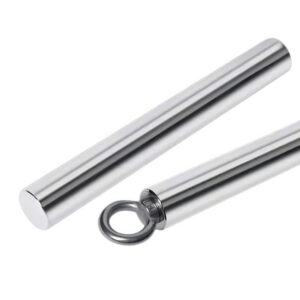
-Product Highlights
The Neodymium Magnetic Filter Rods (12000 Gauss) are precisely engineered for the highly efficient separation of fine ferromagnetic contaminants across demanding industrial applications. Each robust filter rod features an internal high-flux core made of rare-earth neodymium permanent magnets, delivering exceptional magnetic holding force, outstanding long-term durability, heavy-duty corrosion resistance, and reliable purification performance in severe operational environments.
The smooth, seamless stainless steel exterior surface prevents material caking and makes the entire assembly remarkably easy to clean, while customized dimension configurations are available to meet your specific application designs and automated plant equipment requirements.
-Working Principle
These advanced Neodymium Magnetic Filter Rods generate a powerful, deep-reaching magnetic field through their highly optimized internal magnetic core structure. When dry powders, granular bulk materials, or viscous liquid solutions pass directly through or around the active tube surfaces, any presence of ferromagnetic contaminants is quickly attracted, pulled out of the material stream, and securely retained on the sleeve exterior. This continuous physical process ensures efficient magnetic separation, reliable material purification, and strict quality control across your production lines, significantly improving final product quality while shielding expensive downstream machinery from catastrophic wear.
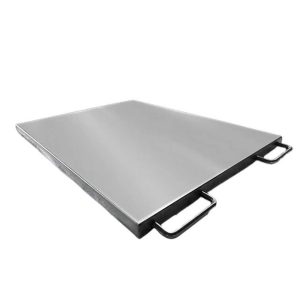
-Product Highlights
Our Industrial Magnetic Plate Separators are high-performance, permanent flat-type magnetic systems designed for heavy-duty iron removal.
- Powerful Capture: Utilizes high-intensity Neodymium or Ferrite magnets to achieve over 98% separation efficiency.
- Rugged Construction: Housed in durable 304/316L stainless steel for maximum wear and corrosion resistance.
- Cost-Efficient: Features zero energy consumption and minimal maintenance requirements.
- Easy Integration: Ideal for chutes, conveyors, and feeding inlets handling powders, granules, and bulk materials.

-Product Highlights
Our Easy-Clean Pull-Out Magnetic Rods (also known as Quick-Clean Magnetic Bars) are high-intensity filtration devices engineered for rapid, manual iron removal. It features a stainless steel outer tube, a neodymium magnet core, and a central pull rod or handle. Suitable for liquids, slurries, and powders, it enables cleaning without opening the equipment and provides significantly higher efficiency compared to fixed magnetic rods. Widely used in lithium battery, fine chemical, food, and pharmaceutical industries.
-Working Principle
The Easy-Clean Pull-Out Magnetic Rods operate by attracting ferrous particles to the magnetic section of the tube. When cleaning is required, the operator simply pulls the ergonomic handle, retracting the internal magnets into the housing.
This action separates the magnetic field from the collected iron, causing impurities to automatically detach from the rod’s surface.
The self-cleaning pull-out mechanism eliminates the need for manual scraping, significantly improving efficiency and ease of use.
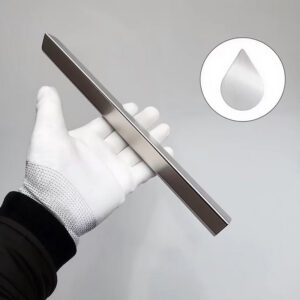
-Product Highlights
The Tear Drop Shape Magnetic Rods (also known as pear-shaped or drop-shaped magnetic bars) feature a unique aerodynamic cross-section engineered from a 304/316L stainless steel shell and a high-intensity neodymium magnet core.
- Anti-Bridging Design: Specifically designed for fine powders with low flow capacity or bridging tendencies.
- Maximum Field Exposure: The specialized shape increases the effective contact area compared to standard round bars.
- Material Flow Optimization: Prevents material buildup, bridging, and clogging in gravity-fed systems.
- Flexible Integration: Ideal for square or round hoppers, chutes, and housing-type magnetic separators.

– Product Highlights
Our Stainless Steel Square Magnetic Bars feature a precise square cross-section engineered to deliver intense permanent magnetic force for advanced industrial purification. By maximizing the structural advantages of flat edges, this specialized profile ensures optimized surface contact and eliminates filtration dead zones. Every stainless steel square magnetic bar is built with a heavy-duty SUS304 or SUS316L stainless steel outer tube encasing a powerful rare-earth Neodymium (NdFeB) core. This durable composition allows the bars to be utilized individually in narrow spaces or seamlessly assembled into customized magnetic grills and grates. We offer fully customizable profiles and versatile sizing tailored to your specific installation direction and material flow requirements.
– Working Principle
Stainless Steel Square Magnetic Bars generate a dense, concentrated magnetic field across their four flat surfaces. As raw materials pass through, ferrous impurities and weakly magnetic particles are instantly captured and locked firmly along the flat edges, preventing them from being washed back into the clean product stream. This passive physical separation process guarantees maximum purity without altering material properties, making it an ideal choice for strict food-grade and medical-grade applications.
Features
Magnetic rods and bars for separation are available in a wide range of configurations to meet different industrial processing requirements, including round magnetic rods, square magnetic bars, and customized designs for specific equipment integration. They are typically manufactured by assembling sintered neodymium iron boron (NdFeB) magnets into a sealed stainless steel tube to form a high-intensity magnetic core.
The stainless steel tube thickness is typically 1.5–2.5 mm, with surface magnetic strength ranging from 6000 to 12000 Gauss and a protection rating up to IP65. These magnetic rods can effectively capture ferromagnetic impurities from powders, granules, and liquids. Optimized magnetic circuit design creates a strong gradient magnetic field, significantly improving iron removal efficiency.
Application Areas
Food Processing: Magnetic rods made with NdFeB magnets comply with food-grade material requirements and are widely used to remove metallic contaminants from flour, grains, and other bulk materials, preventing product contamination and protecting downstream equipment such as grinders and packaging systems.
Pharmaceutical Industry: These magnetic rods are used to remove fine ferromagnetic particles during powder processing, ensuring product purity and compliance with GMP standards.
Chemical Industry: Commonly applied in plastic granulation and rubber processing, magnetic rods help remove iron contaminants from raw materials, protecting injection molding equipment and improving product quality.
In addition, magnetic rods and bars are widely used in mining, new energy, and construction materials processing.
Technical parameters
Standard magnetic rods typically provide a surface magnetic strength of 8000–12000 Gauss, with a magnetic force decay rate of less than 5% per year. A 50 mm diameter rod can reach up to 12000 Gauss, depending on magnet grade, structure, and tube thickness. Higher intensity models can achieve up to 14000 Gauss for demanding separation applications.
In material processing systems, magnetic rods are often installed in magnetic grates or frames. Typical system capacity ranges from 1–10 tons per hour, depending on equipment design and material flow characteristics. The spacing between rods is generally designed at 1.2–1.5 times the rod diameter to ensure optimal material contact with the magnetic field.
Installation and Maintenance
Magnetic rods are typically sealed at both ends and can be customized with M8–M16 threaded holes or lifting rings, allowing flexible horizontal or vertical installation in separation systems.
During cleaning, non-ferrous tools should be used, and protective gloves are recommended to prevent injury caused by strong magnetic force. It is recommended to check magnetic strength every 6–12 months using a Gauss meter. If magnetic strength decreases by more than 15%, the magnetic core should be replaced to maintain optimal performance.
Contact Us