For quality assurance managers and compliance auditors in the food, beverage, and pharmaceutical sectors, a piece of process equipment is only as good as its sanitary certification. When a magnetic grid is placed directly into a product stream, it must not only capture ferrous contaminants but must also guarantee that it will not introduce bacterial risks, rust, or chemical impurities into the consumer-end product.
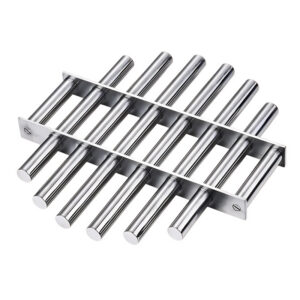
At MagnetGlobal Separation, our manufacturing process treats magnetic separation as a precise science, building every round magnetic grate to comply stringently with international hygiene and safety regulations.
| Specification | Standard Grade | Food / Pharma Grade |
|---|---|---|
| Housing Material | SUS304 Stainless Steel | SUS316L Stainless Steel |
| Surface Finish | Industrial Grained | Mirror Polished (Ra < 0.4um) |
| Welding Quality | Standard Spot Welds | Seamless, Fully Welded |
| Magnetic Strength | 6,000 Gauss | 10,000–12,000 Gauss |
Why Surface Roughness (Ra < 0.4um) Matters in HACCP Audits
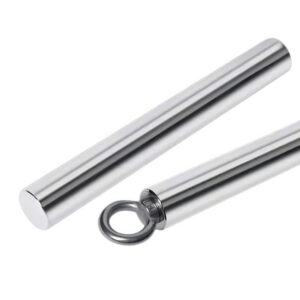
The exterior housing of a heavy-duty magnetic grate acts as the primary barrier between the internal high-performance Neodymium (NdFeB) elements and your raw materials. Standard industrial grids often utilize basic grained stainless steel, which leaves microscopic pits and tool marks on the surface. For food-grade applications, these tiny crevices are hazard zones where organic powders compress, moisture accumulates, and dangerous bacterial colonies cross-contaminate the line.
To prevent this, our food-grade protective sleeves undergo a rigorous, multi-stage mirror-polishing process to achieve a surface roughness rating (Ra) of less than 0.4um. Combined with seamless, 100% full-penetration TIG welding, this ultra-smooth, non-stick surface allows operators to wipe away collected tramp iron effortlessly during routine cleanings, eliminating product retention and smoothly sailing through strict HACCP and BRC plant audits.
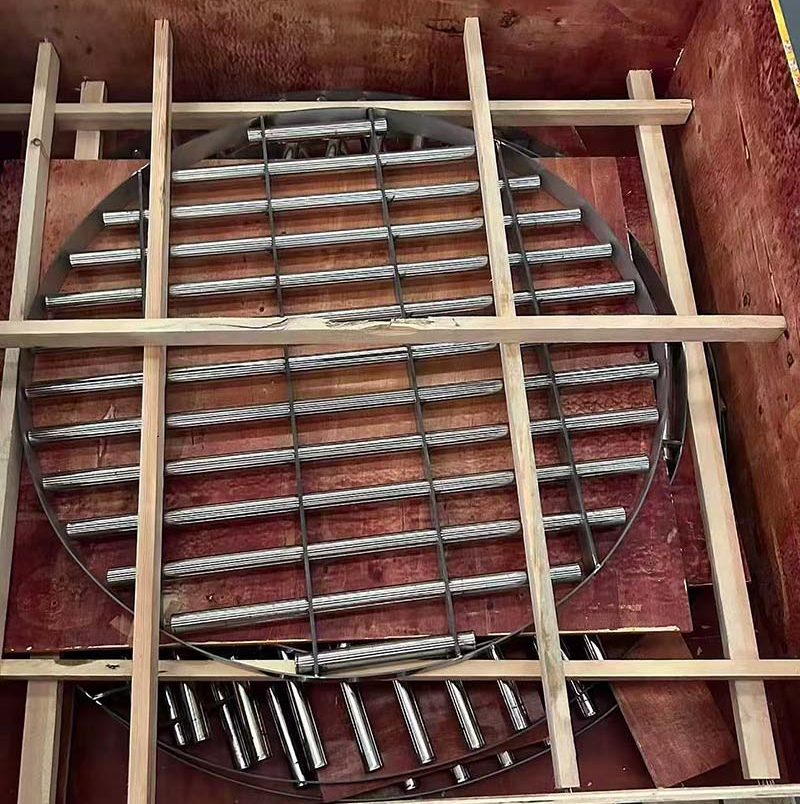
Decoupling Material Science: SUS304 vs. SUS316L
Choosing the correct alloy for your magnetic separator frame is directly determined by your material’s chemical profile:
- SUS304 Stainless Steel: Offers excellent structural integrity and rust resistance for dry, non-corrosive bulk solids like plastics, wheat, starch, and dry grains.
- SUS316L Stainless Steel: The gold standard for high-hygiene lines. Featuring low carbon content and added molybdenum, SUS316L provides superior resistance against pitting and chemical corrosion. It is highly recommended for handling acidic liquid slurries, salty spice blends, or pharmaceutical compounds undergoing aggressive CIP (Clean-in-Place) chemical washdowns.
Demystifying Magnetic Intensity: 6,000 to 12,000 Gauss
The separation capability of a permanent magnetic grate is driven by its internal flux density. Inside our sealed tubes, rare-earth Neodymium magnets are meticulously paired with low-carbon steel flux plates to concentrate the magnetic field outward.
- 6,000 to 8,000 Gauss circuits are highly efficient at pulling out large bulk contaminants, such as loose nuts, bolts, washers, and sheared rivets.
- 10,000 to 12,000 Gauss circuits generate intense localized magnetic gradients capable of trapping micron-sized paramagnetic particles, stainless steel mechanical wear flakes, and fine iron-bearing soil minerals that standard filtration systems miss entirely.
Overcoming the Thermal Demagnetization Barrier
Standard Neodymium magnets face a major engineering bottleneck: thermal degradation. At temperatures exceeding 80 Celsius, standard NdFeB elements lose their magnetic properties irreversibly.
For advanced industrial lines, such as hot air drying lines, bulk powder processing, or industrial roasting kilns, specialized heat-resistant internal configurations must be engineered. By utilizing ultra-high-coercivity magnetic materials, MagnetGlobal Separation supplies custom-stabilized round grates that operate continuously at material temperatures up to 350 Celsius without experiencing loss of surface intensity, guaranteeing decades of reliable, unpowered purification.