
High-Intensity Magnetic Head Rollers
-Product Highlights
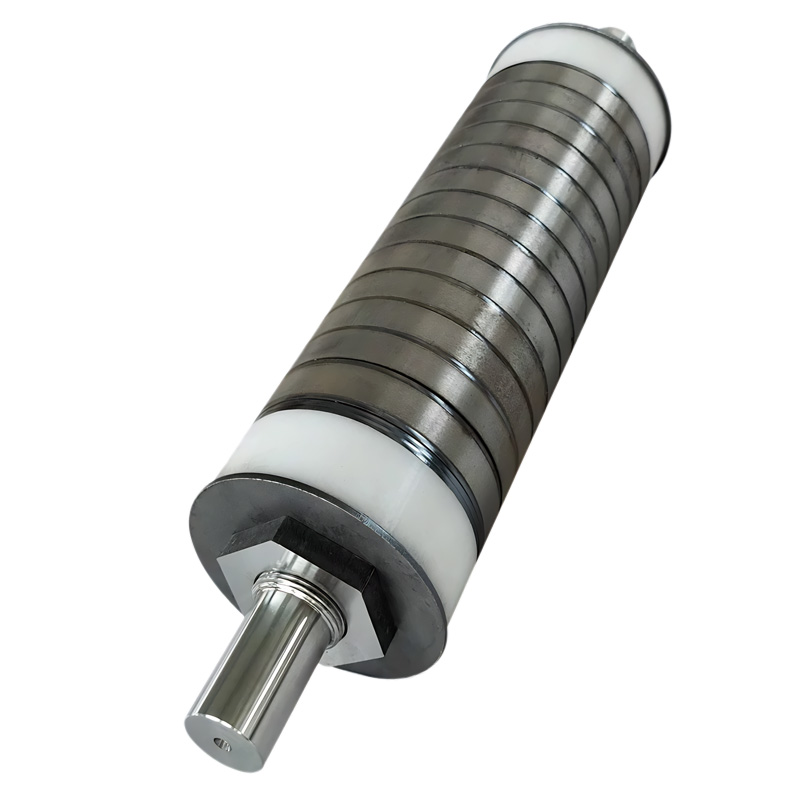
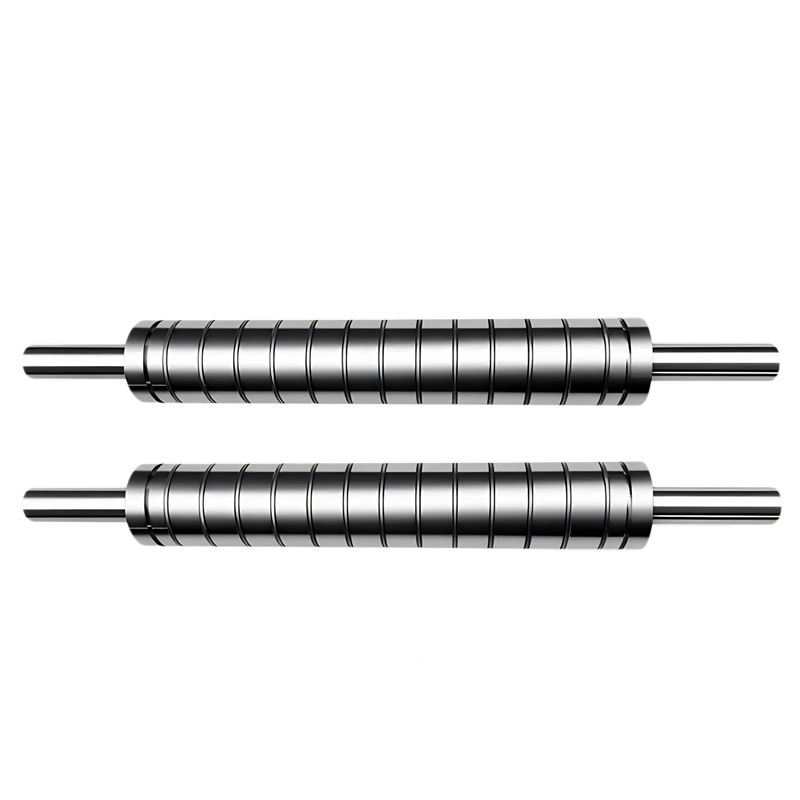
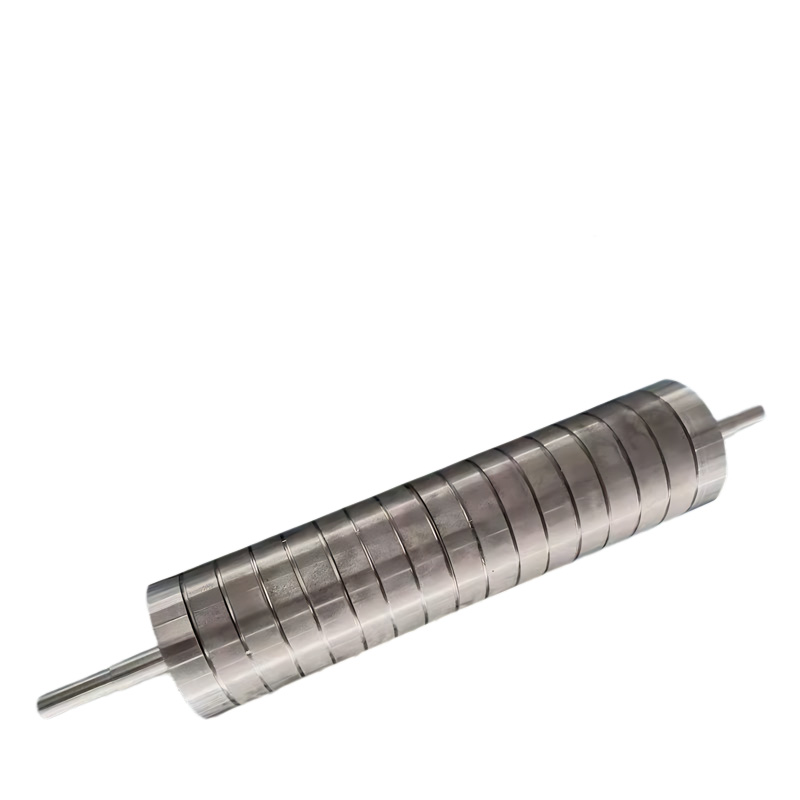
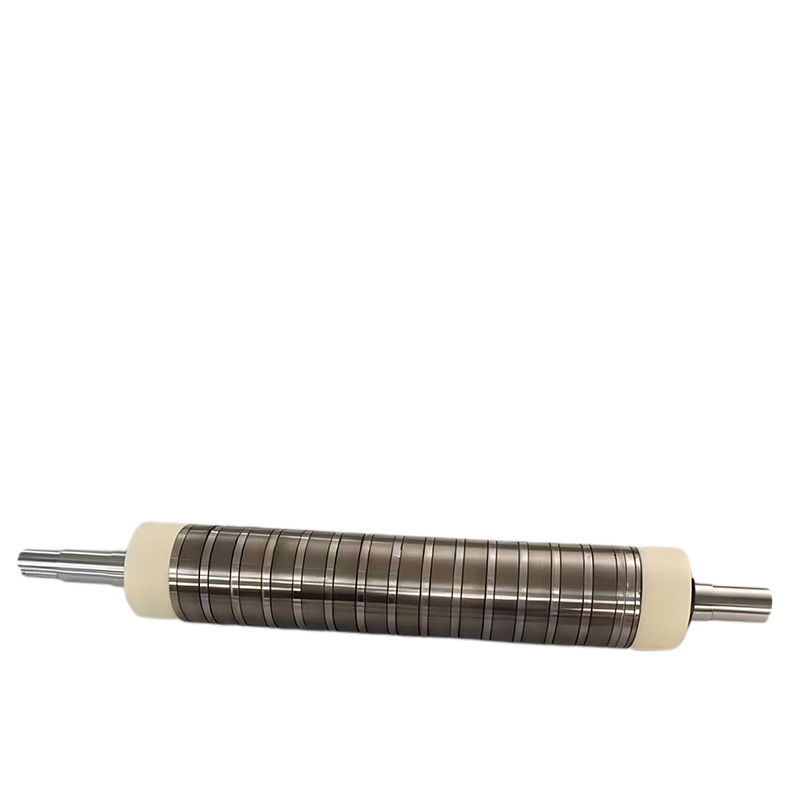
The High-Intensity Magnetic Head Rollers are premier industrial engineering components designed to serve as the critical automated separation point at the discharge head of conveyor systems. Each precision-built pulley is composed of high-performance, rare-earth permanent magnets and high-permeability magnetic conductive plates, forming an intensely concentrated magnetic field through an optimized magnetic circuit design. Specially engineered to replace standard head pulleys in magnetic separators and iron removal equipment, these rollers enable precise continuous separation of both strongly ferromagnetic and weakly magnetic contaminants from fast-moving dry powders and granular materials. Due to their exceptional field depth and rugged durability, they are widely adopted across heavy industrial processing lines within the mining, metallurgy, lithium battery materials, and plastics recycling industries.
Product Information
Working Principle
High-Intensity Magnetic Head Rollers operate by utilizing a combined force of material forward inertia, gravitational pull, and intense magnetic attraction at the conveyor belt’s termination point. As dry bulk materials travel along the conveyor and reach the rotating head roller, non-magnetic materials follow a natural centrifugal trajectory, launching forward into the clean product discharge chute. Concurrently, any tramp iron, mechanical rust particles, or weakly magnetic contaminants enter the high-gradient magnetic zone, where they are immediately drawn to the belt surface and held tightly against it. As the belt wraps around and moves away from the underside of the magnetic roller, the magnetic attraction drops off naturally, causing the trapped iron fragments to release automatically into a separate refuse collection bin without interrupting plant throughput.
Structure and Heavy-Duty Mechanical Construction
Every High-Intensity Magnetic Head Roller manufactured by MagnetGlobal is engineered as a robust, structural-grade driving component built to handle immense mechanical torque and abrasive material environments. The outer cylindrical shell, heavy-duty drive shafts, and welded end flanges are fabricated from premium, non-magnetic SUS304 or SUS316 stainless steel to eliminate magnetic flux leakage and ensure maximum field projection into the material bed. Inside the fully sealed drum casing, a sophisticated array of high-coercivity rare-earth Neodymium (NdFeB) magnets is arranged in a proprietary high-gradient configuration that provides stable magnetic flux density over decades of constant plant service. The shaft extensions are precision-machined to accommodate standard industrial pillow block bearings, drive sprockets, or direct motor couplings, allowing for seamless mechanical replacement of your existing non-magnetic head pulleys.
Features and Specialized Process Control
A defining technical advantage of our High-Intensity Magnetic Head Rollers is their ability to deliver uniform magnetic coverage across the entire width of the conveyor system, eliminating any dead zones where fine contaminants could slip through. The core magnetic circuit can be customized to project surface magnetic strengths ranging from a standard 4,000 Gauss up to an ultra-high intensity of 12,000 Gauss, making it uniquely capable of capturing micron-sized iron dust and weakly magnetic oxidized steel scales. To prevent fine abrasive dust or liquid moisture from penetrating the internal magnet matrix, the roller assembly features a fully sealed, IP65-rated weatherproof structure, allowing it to perform reliably in harsh outdoor mining quarries or high-humidity chemical plants. While standard units operate flawlessly at ambient temperatures up to 80 degrees Celsius, custom configurations can be specified with thermal-stabilized internal magnets to handle hot materials directly following industrial dryers or calcining kilns up to 150 degrees Celsius.
Key Advantages and Plant Automation Value
Investing in the MagnetGlobal High-Intensity Magnetic Head Roller line yields exceptional process automation benefits, permanent downstream machinery safety, and an immediate reduction in manual labor costs. Because the roller acts as a continuous self-cleaning mechanism driven by the main conveyor belt, it completely removes the need for operators to stop production lines for manual wiping or scraping, translating to true zero-downtime operation. Operating entirely on permanent magnetic physics means the core separation field requires zero electrical grid power to maintain its intense pulling force, delivering substantial monthly energy savings compared to electromagnets and ensuring that dangerous tramp metals are captured even during sudden plant-wide power failures. By capturing sharp metal objects before they pass further down the process line, it effectively shields expensive secondary equipment like crushers, pulverizers, and granulators from catastrophic mechanical breakdown.
Target Applications and Technical Customization
These industrial-grade High-Intensity Magnetic Head Rollers serve as vital purification and asset-protection checkpoints globally trusted across large-scale aggregate, mineral dressing, and bulk handling sectors. They are extensively utilized in silica sand and glass raw material purification, iron ore concentration, shredded plastic and electronic scrap recycling, and the fine chemical sector for treating raw bulk solids. MagnetGlobal provides comprehensive technical engineering, customized blueprinting, and complete mechanical integration support to fit your exact facility layouts. Our experienced engineering team can customize the total drum diameter, face width, shaft extensions, keyway dimensions, and magnetic field depths to match your exact belt speed, material bed thickness, and structural conveyor frame, ensuring world-class separation performance and unbeatable operational reliability.
Contact Us
If you have any needs or questions, please feel free to contact us. Our team is always available — real people, ready to help at every step.